
Mechanism of Action
Learn More
Blujepa (gepotidacin) Medical Education
US Medical Affairs provides evidence-based scientific information and educational materials for US healthcare professionals.
Abbreviations: DNA =deoxyribonucleic acid; MOA = mechanism of action
References
1. Bax BD, et al. Nature. 2010;466(7309):935-940; 2. Gibson EF, et al. Infect Dis. 2019;5(4):570-581; 3. Oviatt AA, et al. ACS Infect Dis. 2024;10(4):1137-1151.
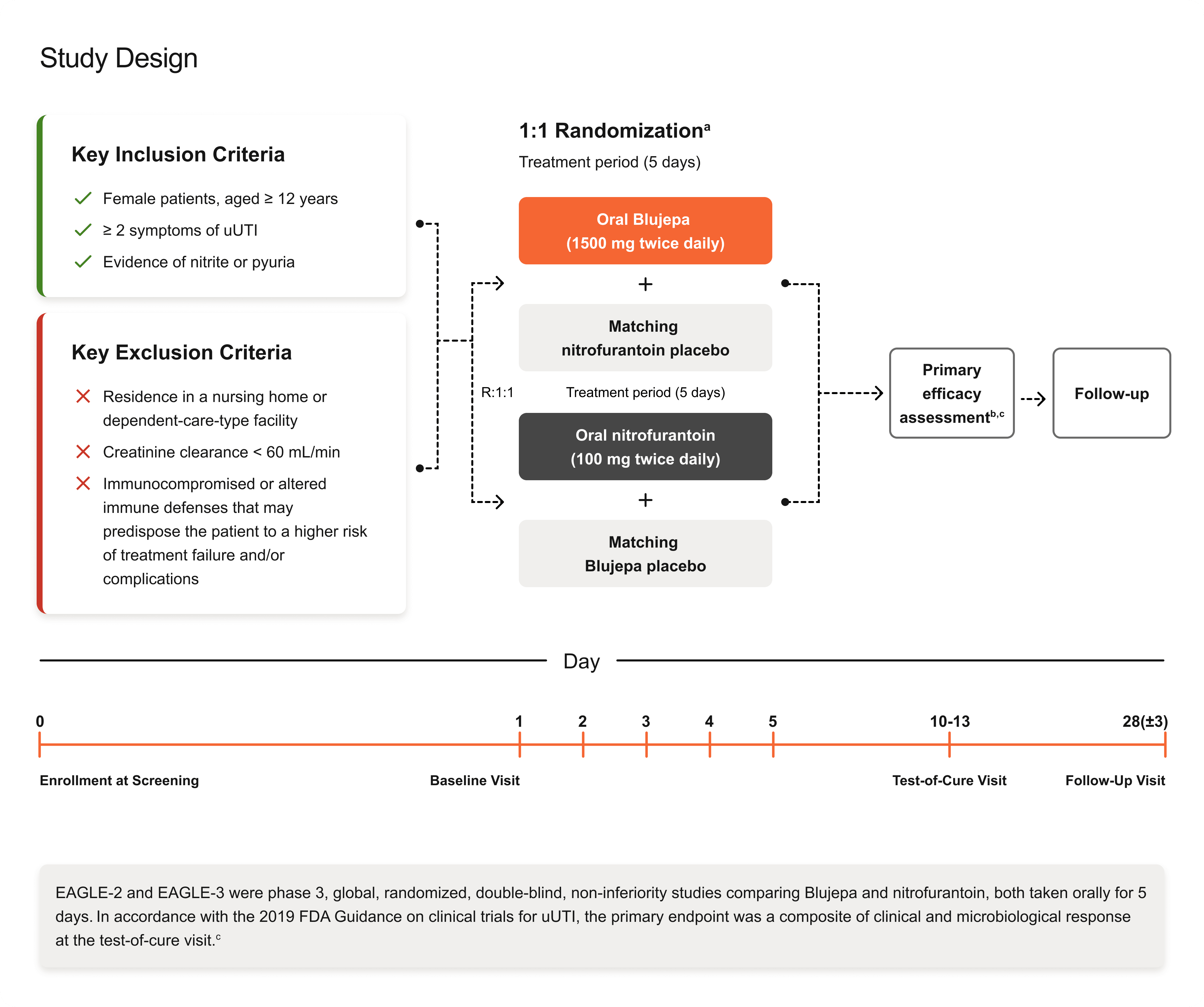
EAGLE‑2 and EAGLE‑3: Blujepa in Uncomplicated UTI1,2
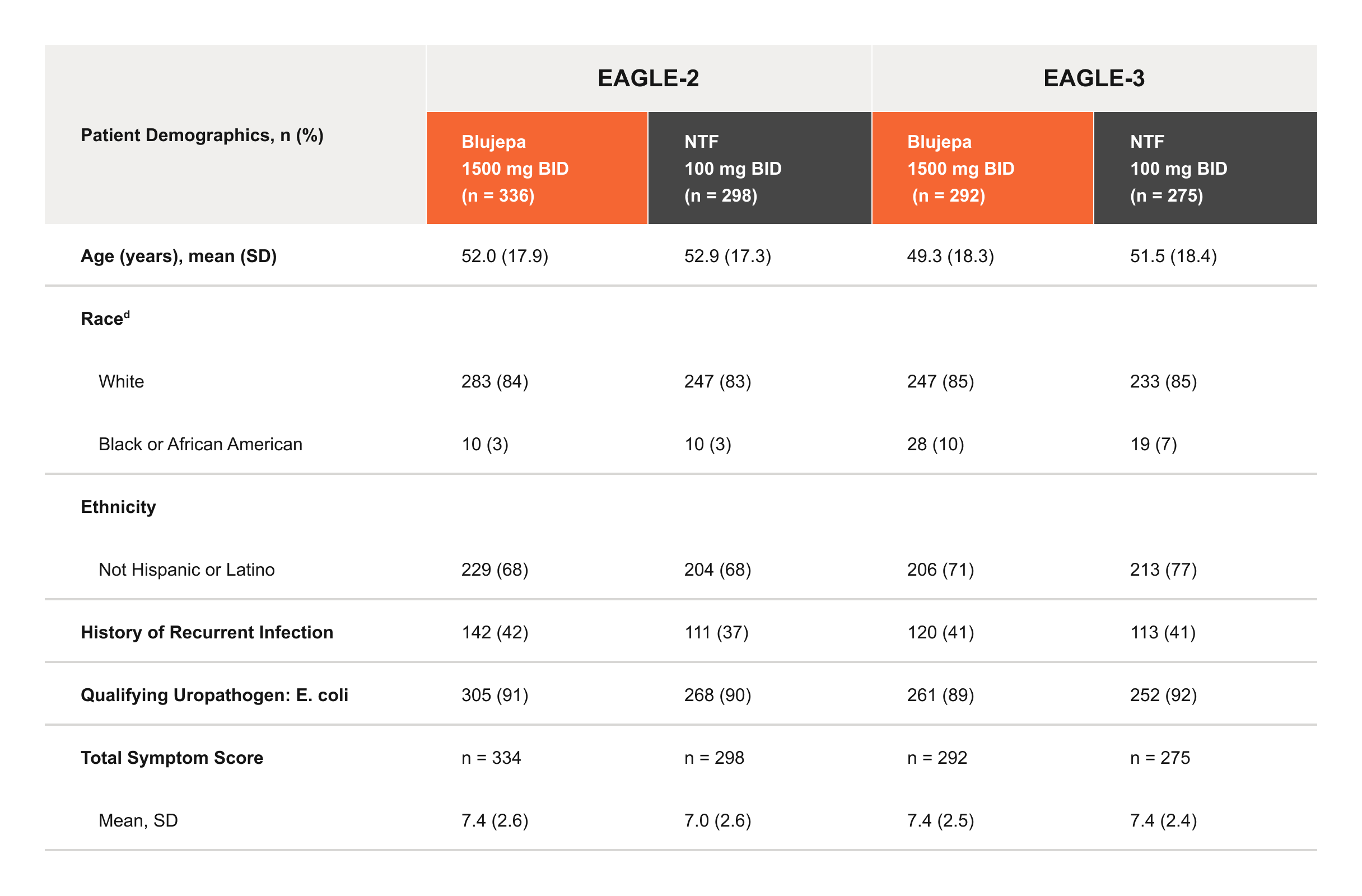
Baseline Demographics: Micro ITT NTF-S2
Better experience for infographic & table Learn More
Footnotes: a Stratified by age and uUTI recurrence; b Pre-planned interim analyses; c The primary endpoint, therapeutic response, could be classified as either success or failure. Efficacy was based on therapeutic success, which required both clinical success and microbiological success. Clinical success: resolution of baseline signs and symptoms with no new signs and symptoms of uUTI. Microbiological success: reduction in all qualifying bacterial uropathogens recovered at Baseline from ≥ 105 CFU/mL to < 103 CFL/mL on quantitative urine culture. TOC visit occurred between days 10-13; d The racial composition of the rest of the study populations was as follows for EAGLE-2 and EAGLE-3, respectively: American Indian or Alaska Native, 8%/< 1%; Asian, 3%/6%; Mixed Race, 1%/< 1%
Abbreviations: Micro-ITT NTF-S = Microbiological Intent-to-Treat Nitrofurantoin-Susceptible; R = randomized; SD = standard deviation; UTI = urinary tract infection; uUTI = uncomplicated urinary tract infection.
References
1. Perry C, et al. Infect Dis Ther. 2022;11(6):2297-2310; 2. Wagenlehner F, et al. Lancet. 2024;403:741-755
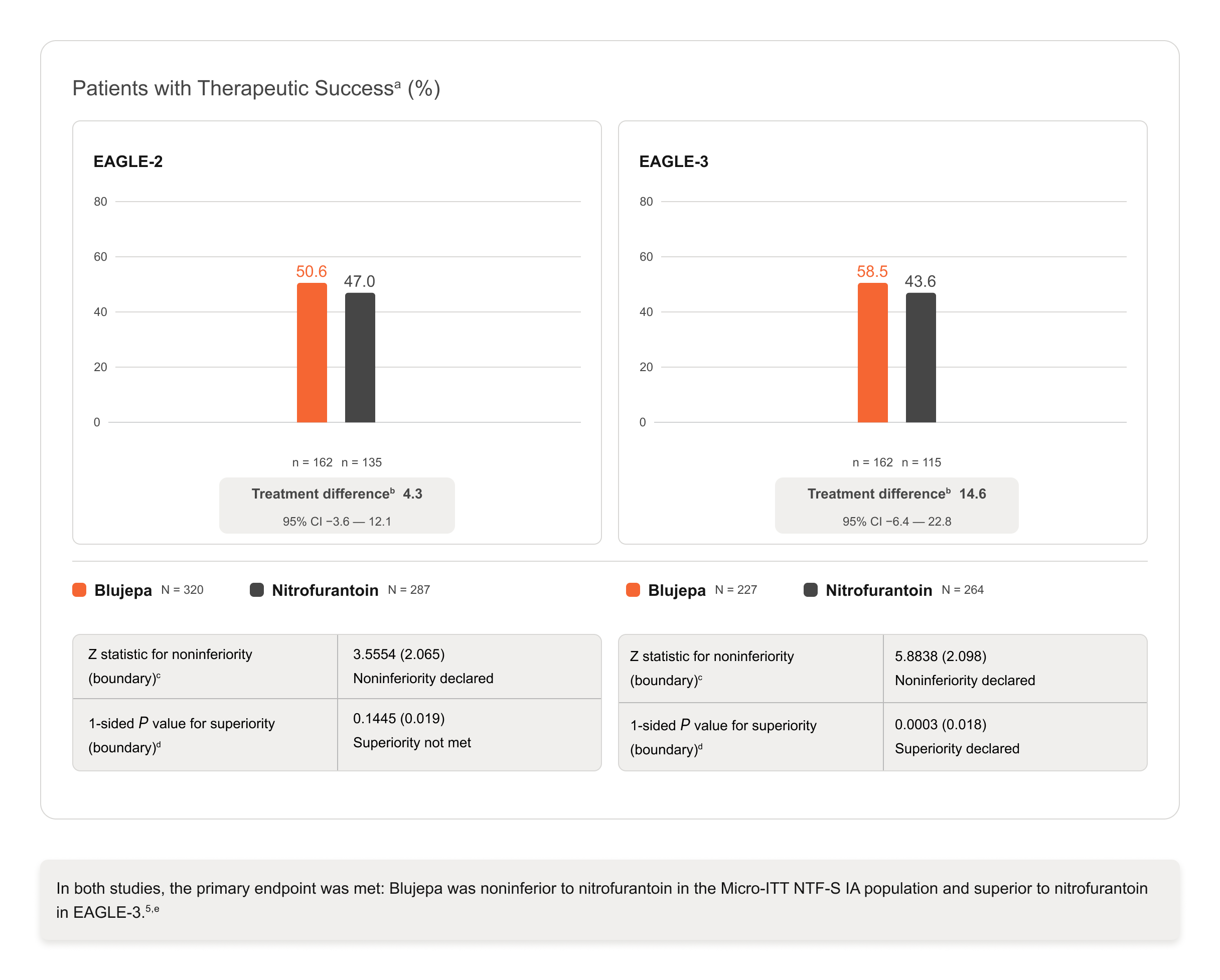
Primary Efficacy Endpoint: Therapeutic Success at TOC1
Better experience for chart Learn More
Footnotes: a The primary endpoint, therapeutic response, could be classified as either success or failure. Efficacy was based on therapeutic success, which required both clinical success and microbiological success. Clinical success: resolution of baseline signs and symptoms with no new signs and symptoms of uUTI. Microbiological success: reduction in all qualifying bacterial uropathogens recovered at Baseline from ≥ 105 CFU/mL to < 103 CFL/mL on quantitative urine culture. TOC visit occurred between days 10-13; b Treatment difference: Blujepa − nitrofurantoin; c Noninferiority was declared if the observed Z statistic was greater than the non-inferiority boundary; d Superiority was declared if the 1-sided P value was less than the superiority boundary; e The primary analysis population (Micro-ITT NTF-S IA) included patients who had a NTF-susceptible pathogen at Baseline, received at least 1 dose of study drug, and reached TOC visit or were known to have experienced therapeutic failure by interim analysis.
Abbreviations: CI = confidence interval; Micro-ITT NTF-S IA = Microbiological Intent-to-treat Nitrofurantoin-Susceptible Interim Analysis Set; TOC = test-of-cure.
References
1. Wagenlehner F, et al. Lancet. 2024;403:741-755
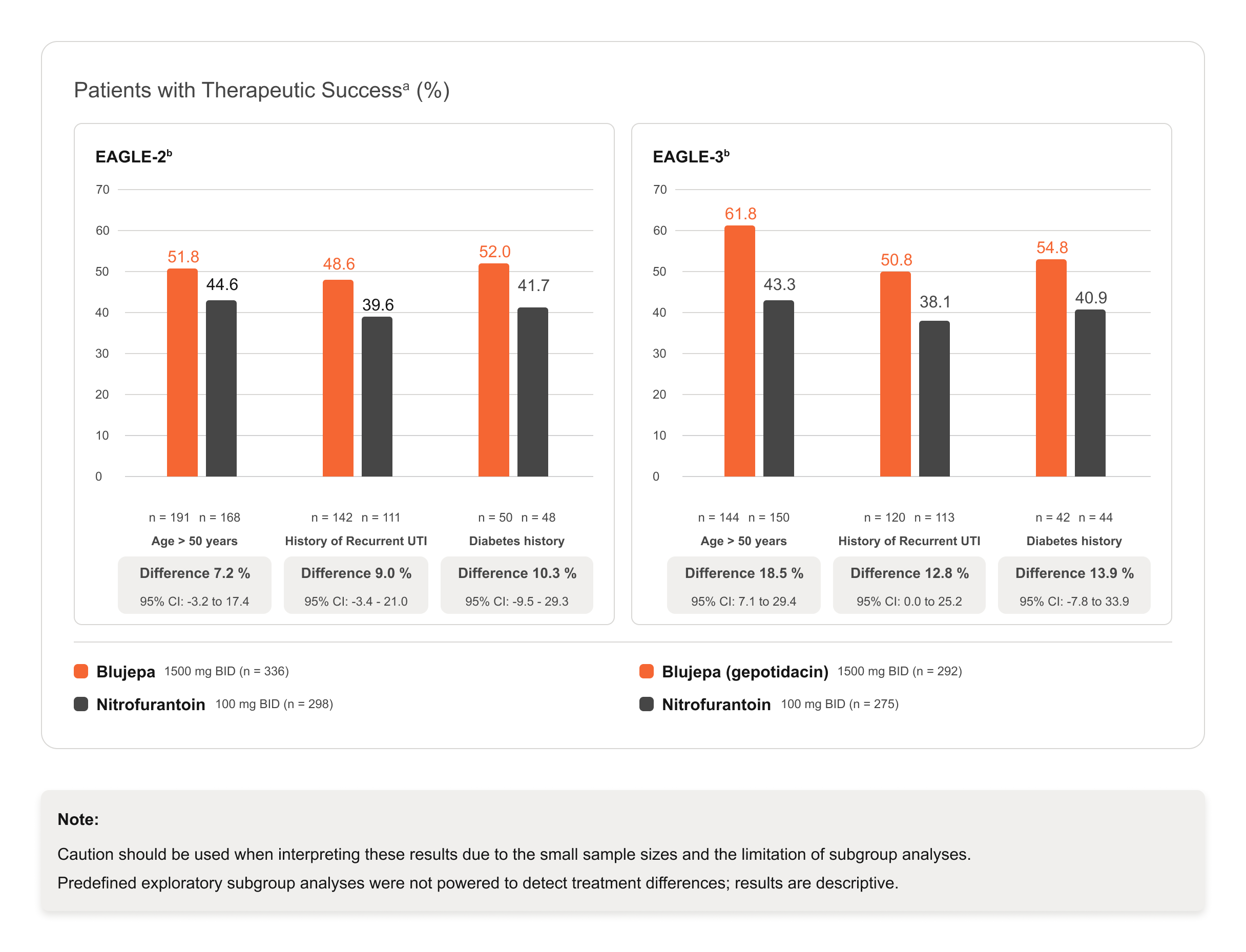
Subgroup Analyses: Patients >50 Years of Age, History of Recurrent UTIs, and Diabetes1,2
In pre-specified subgroups, the therapeutic success for Blujepa vs nitrofurantoin in older patients and patients with a history of recurrent infections was similar to the overall therapeutic success for each trial.
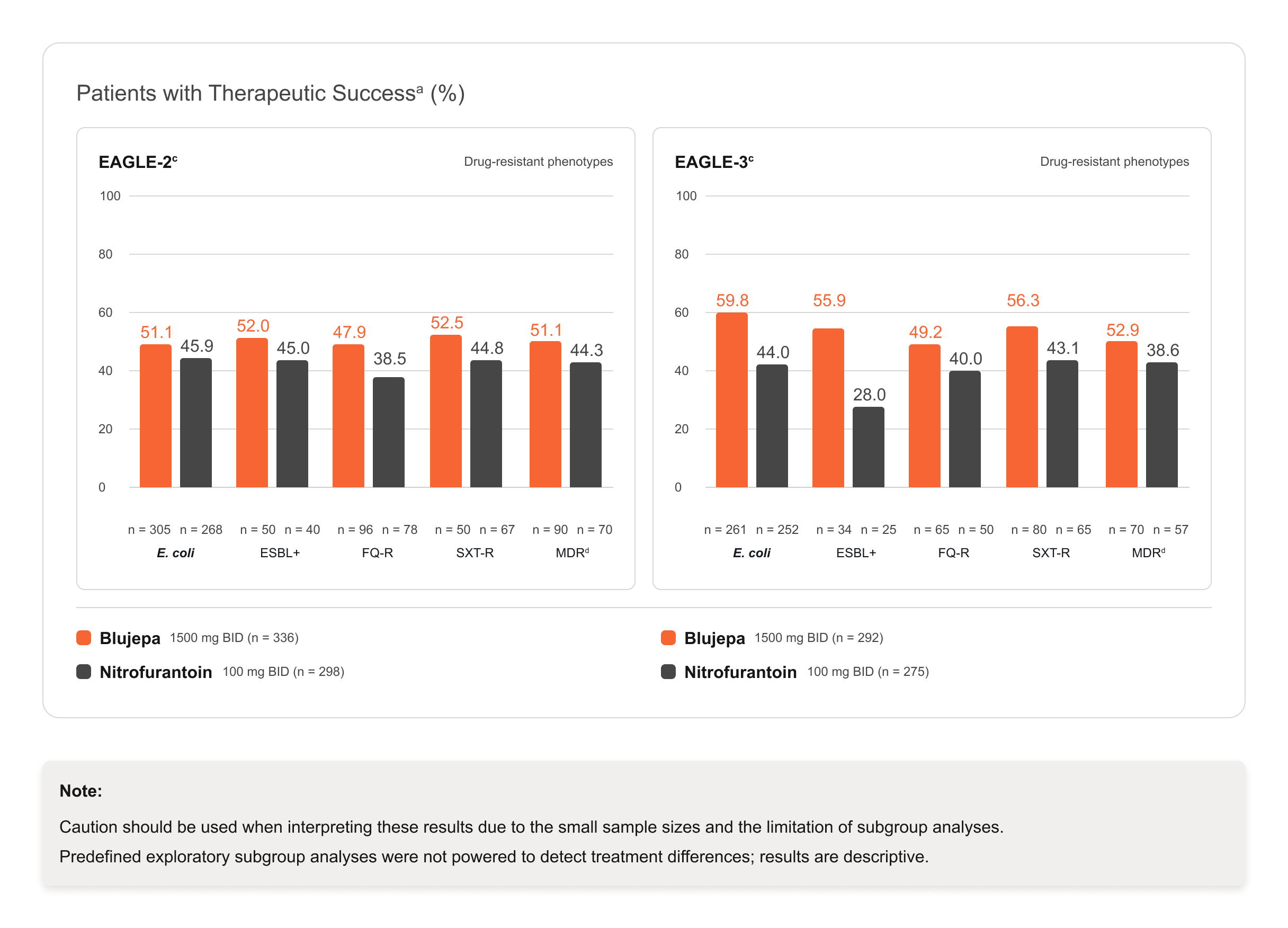
Subgroup Analyses: Subgroups of Drug-Resistant E.coli1
In pre-specified subgroups, the therapeutic success for Blujepa vs nitrofurantoin in subgroups of drug-resistant E. coli was similar to the overall therapeutic success for each trial.5,6
Better experience for chart Learn More
Footnotes: a The primary endpoint, therapeutic response, could be classified as either success or failure. Efficacy was based on therapeutic success, which required both clinical success and microbiological success. Clinical success: resolution of baseline signs and symptoms with no new signs and symptoms of uUTI. Microbiological success: reduction in all qualifying bacterial uropathogens recovered at Baseline from ≥ 105 CFU/mL to < 103 CFL/mL on quantitative urine culture. TOC visit occurred between days 10-13; b Micro-ITT NTF-S population; predefined exploratory efficacy analysis results are descriptive; c Micro-ITT NTF-S population (included overrun patients enrolled after the interim analysis but before study stop), results are descriptive; d Multidrug resistant to ≥ 3 clinically relevant antibiotic classes.
Abbreviations: BID = twice daily; ESBL+ = extended-spectrum beta-lactamase–positive; FQ-R = fluoroquinolone-resistant; MDR = multidrug-resistant; SXT-R = trimethoprim-sulfamethoxazole resistant; UTI = urinary tract infection.
References
1. Wagenlehner F, et al. Lancet. 2024;403:741-755; 2. Wagenlehner F, et al. Lancet. 2024;403:741-755. Supplementary appendix.
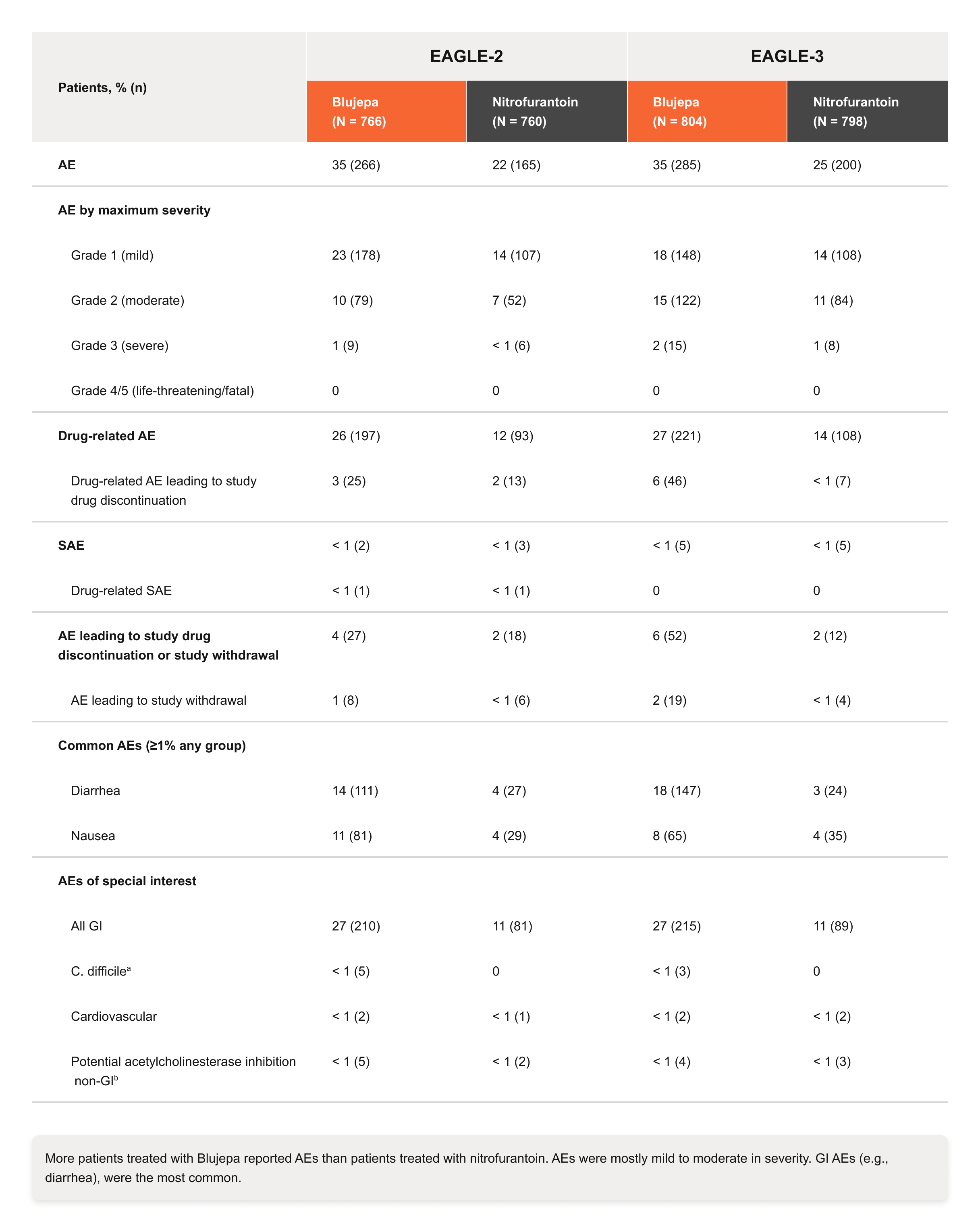
Safety Results (Safety Population)1,2
Across both studies, more patients treated with Blujepa reported AEs than patients treated with nitrofurantoin. AEs were mostly mild to moderate in severity, and GI AEs were the most common.
Better experience for chart Learn More
Footnotes: a C. difficile assessed in patients with signs/symptoms of GI disturbance and ≥ 3 non-formed stool specimens in a 24 hour period or significant change from Baseline; b Potential acetylcholinesterase inhibition events started no later than 12 hours after the latest.
Abbreviations: AE = adverse event; GI = gastrointestinal; SAE = serious adverse event.
References
1. Wagenlehner F, et al. Lancet. 2024;403:741-755; 2. Wagenlehner F, et al. Lancet. 2024;403:741-755. Supplementary appendix.
View Transcript
You are now leaving GSK’s website
This webinar was developed by the Coalition for Global Hepatitis Elimination and is supported by GSK. GSK had no input on webinar content or speakers.
This link will take you to a non-GSK website. GSK does not recommend, endorse or accept liability for sites controlled by third-parties.